

A zip-around wallet seals every edge behind a continuous zipper so nothing falls out, while a snap wallet closes with a single fast clasp that trades total enclosure for quicker one-handed access. That one decision, zipper or clasp, shapes how secure your carry feels, how fast you reach your cards, and how much the wallet bulks up in a pocket or bag.
A zip-around wallet seals every edge behind a continuous zipper so nothing falls out, while a snap wallet closes with a single fast clasp that trades total enclosure for quicker one-handed access.
- Closure defines the wallet: a zip-around fully encloses cards, cash, and coins behind a zipper, while a snap holds the wallet shut with one magnetic or post-and-socket clasp.
- Security favors the zipper: a continuous zip seals all four edges for travel and loose coins, where a snap leaves a single seam that can pop open under pressure.
- Speed favors the snap: a clasp opens in one motion with a thumb, while a zipper asks for a second hand and a half-second pull.
- Hardware is the failure point: the house Closure-Cycle Test treats the zipper pull and the snap spring as the parts most likely to wear, so solid metal hardware matters as much as the leather.
- Leather grade decides the lifespan: full-grain is the most durable cut and earns a patina, so it outlasts the closure debate on either form.
On our bench, we treat the closure as the spine of the whole design, not an afterthought stitched on at the end. The leather, the slot count, the fold: all of it answers to how the wallet opens and shuts. So before you weigh a zip-around against a snap, it helps to understand what each closure is actually doing.
This guide walks the differences the way we think about them when we cut and hand-stitch a wallet: security, speed, bulk, and the hardware that has to survive years of daily use. If you want the broader vocabulary first, our guide to every part of a wallet maps the terms we'll lean on here.
What is the difference between a zip-around wallet and a snap wallet?
The difference is total enclosure versus single-point closure: a zip-around runs a zipper around three sides so the wallet seals shut like a clam, while a snap wallet stays closed with one clasp at the fold and leaves its top edge open. Everything else, capacity, security, and speed, flows from that structural choice.
A zip-around is built so that when the zipper is closed, there is no opening. Cards, folded cash, loose coins, a spare key: all of it sits in a sealed envelope. You have to run the pull all the way around to get in, and that same path keeps everything in.
A snap wallet, by contrast, behaves more like a bifold that wears a clasp. It folds in half (or thirds), and a single snap or magnetic catch holds the fold together. The card bays and bill compartment still open at the top; the snap simply stops the wallet from flapping open in your pocket.
We name the test we run on both the same way: the Closure-Cycle Test, the habit of asking how a wallet behaves across thousands of opens and closes, not just the first satisfying one. The failure mode here is judging a wallet by how it feels in the shop. A snap that clicks crisply on day one and a zipper that glides smoothly both have to survive the next two years, and that's a different question entirely.
How does a zip-around closure keep your cards, cash, and coins from falling out?
A zip-around keeps everything in because the zipper forms a continuous sealed perimeter: once it's closed, there is no edge for a card to slide out of or a coin to escape from. That perimeter is the whole point of the form.
Picture the wallet open and flat. The zipper teeth run down one side, across the bottom, and up the other, meeting the pull. When you close it, the two leather panels fold together and the teeth interlock along that full path. Now the interior is a pouch, not a stack of open pockets.
This is why the zip-around is the natural home for coins. A coin has no fixed shape in a pocket: it migrates, it slips, it finds gaps. Inside a sealed zip-around, it has nowhere to go. If you're weighing whether you even need that, our look at whether a coin pocket is right for you breaks down who actually carries change.
The same seal protects receipts, a folded note, even a passport in a larger zip-around or continental-style wallet. When we hand-stitch a zip-around on our bench, we set the zipper tape into the leather so the teeth sit just proud of the edge: close enough to seal, set back enough that the pull never catches the leather. The failure mode is a zipper sewn too tight to the fold, where the leather pinches in the teeth and the pull stutters. A good zip-around opens like a sentence, smoothly, start to finish.
How does a snap or magnetic clasp work on a wallet, and how fast is it to open?
A snap or magnetic clasp works by holding two leather faces together at one point, and it opens in a single thumb motion, faster than any zipper because there's no path to travel. Speed is the snap's defining advantage.
There are two common mechanisms. A traditional snap is a post-and-socket pair: a metal stud on one panel presses into a sprung socket on the other, and it releases with a small, deliberate pop. A magnetic clasp swaps the spring for two magnets: closure is silent and automatic, and opening takes a gentle pull rather than a press.
Both share the same virtue. You flick the clasp with a thumb and the wallet falls open; there is no zipper to run, no second hand required. For someone who reaches for a card a dozen times a day, at a counter, a gate, or a card reader, that half-second adds up.
The trade-off lives in the spring and the magnet. A post-and-socket snap can loosen over years until it no longer holds firmly; a magnet can weaken if it's a cheap one. The failure mode is a clasp chosen for its first-day snap rather than its hundredth-month grip. On our bench we set snap hardware into reinforced leather so the post has a solid bed and the panel doesn't tear around it: the leather around the snap does as much work as the metal.
Which closure is more secure for travel, a zip-around or a snap wallet?
For travel, the zip-around is the more secure closure: a sealed perimeter resists spills, drops, and the chaos of a bag far better than a single clasp that can be nudged open. When the wallet is out of your sight and tumbling in a carry-on, enclosure wins.
The reasoning is simple physics. A snap holds at one point, so any force that pries that point, a corner catching on a zipper inside your bag or the weight of other items pressing the fold, can pop it. A zip-around has no single point to defeat; the seal holds along its whole length.
Security also includes what you can't see. RFID-protected styles, offered on select GENTCREATE wallets, shield the chips in contactless cards from being read in transit, useful in crowded terminals. That protection is independent of closure type, but it pairs naturally with the all-in enclosure of a zip-around for a traveler who wants one sealed unit.
| Closure | Enclosure | Travel security | Best at protecting |
|---|---|---|---|
| Zip-around | All edges sealed | Highest | Coins, cash, receipts, loose items |
| Snap (post-and-socket) | One clasp, open top | Moderate | Cards in a structured fold |
| Magnetic clasp | One catch, open top | Moderate | Quick-access cards |
The failure mode for the traveler is assuming any wallet protects its contents equally. A snap is wonderful at a café and merely adequate in the belly of a backpack. If you carry a passport and boarding documents, lean toward the zip-around, and our continental and clutch comparison covers the larger travel-ready forms.

Which wallet is easier to open and use one-handed?
The snap wallet is easier to use one-handed: a clasp releases with a single thumb press, while a zipper almost always asks for a second hand to anchor the wallet and pull the tab. If one-handed access matters, the snap wins outright.
Try it in your head. To open a zip-around, you hold the body in one hand and draw the pull with the other; the zipper resists just enough that a one-handed pull tends to drag the whole wallet. A snap, you simply press and it falls open in the same hand.
This is the everyday counterpoint to the zip-around's travel security. The two closures optimize for opposite moments: the snap for the quick, frequent reach, the zipper for the sealed, set-it-and-forget-it carry. Most people lean one way based on how their day actually runs.
We apply the Closure-Cycle Test here too. The question isn't whether you can open it once one-handed, but whether the motion stays effortless on the thousandth try. A snap that's too stiff fights your thumb; one that's too loose flaps open on its own. The failure mode is a clasp tuned wrong in either direction. The sweet spot is a snap that gives way with a confident, repeatable click, firm enough to trust, easy enough to never think about.

How do zip-around and snap wallets compare on bulk and capacity?
On bulk and capacity, the zip-around generally holds more but rides thicker, while the snap stays slimmer and faster at the cost of a smaller, less-sealed interior. The zipper buys you room and security; you pay for it in millimeters.
A zip-around's sealed pouch lets it carry what a folding wallet can't risk, coins, a few folded bills, or a key, and many run eight or more card slots plus a billfold. That volume, combined with the zipper tape itself, makes it the bulkier object. A snap wallet, often a bifold or trifold underneath, keeps a trimmer profile and reaches its cards faster.
For context on the folding forms a snap usually wraps, our bifold versus trifold guide is the companion read. A bifold typically holds around six to ten cards, a trifold around ten to twelve.
| Factor | Zip-around | Snap wallet |
|---|---|---|
| Typical capacity | High (cards, cash, coins) | Moderate (cards, folded cash) |
| Profile | Thicker | Slimmer |
| One-handed access | Harder | Easier |
| Coin-friendly | Yes, sealed | Only with a dedicated bay |
| Best fit | Bag, jacket, travel | Front or back pocket |
A useful frame: full credit cards are about 0.76 mm each, so a stack of eight is roughly 6 mm of cards before any leather or coins. A zip-around accommodates that stack and seals it; a snap keeps the same cards slimmer but leaves the top open. The failure mode is over-buying capacity: a sealed zip-around you fill to bursting becomes a brick. Carry only what you use, and the right size reveals itself. For the roomier end of the range, our Large Leather Wallets collection is built for higher capacity in both closures.
What leather and hardware make a zip or snap wallet last for years?
Full-grain leather and solid metal hardware are what make either wallet last for years: the leather resists wear and earns a patina, while the closure's metal parts determine whether the wallet survives daily cycling. A wallet fails at one of two places: the leather or the closure. Get both right and it lasts.
Full-grain is the most durable cut of leather, taken from the top layer with its grain intact, and it develops a patina that deepens with use, the surface that looks better at year five than year one. Top-grain is lightly sanded and smoother but slightly less rugged; calfskin, Italian calf leather, and structured finishes like Saffiano and Epsom each bring their own character. We let full-grain earn its character rather than coating it into uniformity.
The hardware is the part most people underestimate. A zip-around lives or dies by its zipper pull and teeth; a snap lives or dies by its spring or magnet. This is exactly what the Closure-Cycle Test is for: judging the metal across years of opens, not the first crisp pull. The failure mode is a beautiful leather wallet let down by a weak zipper or a snap that fatigues, because the part you touch most is the one that gives out first.
Basic care extends both. Keep the leather conditioned so it stays supple and resists cracking at the fold; keep grit out of a zipper so the teeth don't grind. Conditioning a few times a year is usually enough for everyday carry.

How does GENTCREATE handcraft zip-around and snap leather wallets with durable hardware and full-grain leather?
GENTCREATE handcrafts both closures the same way: by controlling every stitch, fold, and cut so the leather and the hardware are matched to last, then selling direct so atelier quality reaches you without the middleman markup. We're a maker, not a reseller, which means the closure decision is ours to get right from the first cut.
When we hand-stitch a zip-around, we set the zipper tape into the leather so the seal sits clean and the pull never snags. When we build a snap wallet, we reinforce the leather bed under the stud so the panel won't tear and the clasp keeps its grip. In both, the minimalist doctrine holds: clean lines, uncluttered design, nothing on the wallet that doesn't earn its place.
Because we control the process, quality is a process choice, not a price tier. Full-grain leather, hand-stitching, RFID-protected styles where offered, and a sustainable gift box come standard rather than as upsells. Personalization is available through our Custom Leather Wallets line, and every order ships with free shipping and a product warranty. You can see the full range across closures and forms in our Leather Wallets collection, with the higher-capacity styles in Large Leather Wallets.

Your zip-around vs snap wallet checklist
Decide your top priority first: choose a zip-around for sealed security or a snap for one-handed speed, then let the rest of this list confirm the fit.
- Decide your priority first. Sealed security points to a zip-around; one-handed speed points to a snap.
- Count what you actually carry. Coins and loose items need the zip-around's seal; a lean card stack suits a snap.
- Match the closure to your day. Frequent reaches favor a clasp; travel and bags favor a zipper.
- Inspect the hardware. A solid zipper pull or a confident, repeatable snap matters as much as the leather.
- Choose the leather grade. Full-grain for maximum durability and patina; top-grain or a structured finish for a smoother face.
- Size it to your carry, not your fears. Don't over-buy capacity you'll never fill.
- Check for the details that last. RFID protection where offered, conditioned leather, and a warranty behind it.
Frequently asked questions
The right closure comes down to whether you prize sealed security or one-handed speed, and these answers cover the trade-offs that decide it.
Is a zip-around or a snap wallet better for everyday carry? It depends on whether you value security or speed, since each closure wins a different moment. A snap is faster for the dozen small reaches in a typical day; a zip-around is more secure for carrying coins, cash, and cards as one sealed unit. Most people choose by how often they open the wallet versus how much they need it to stay shut.
Do zip-around wallets hold more than snap wallets? Generally yes, because the sealed pouch can safely carry coins and folded cash a snap wallet can't. A zip-around often runs eight or more card slots plus a billfold, while a snap wallet, usually a bifold or trifold underneath, stays slimmer with a smaller interior. The trade is room and security against a thicker profile.
Can you open a zip-around wallet with one hand? It's possible but awkward, since the zipper usually needs one hand to anchor the wallet and another to pull the tab. A snap wallet opens cleanly with a single thumb press, which is why it's the easier one-handed choice. If one-handed access is your priority, lean toward the snap.
Which closure is more secure for travel? The zip-around is more secure for travel because its sealed perimeter resists spills, drops, and the jostling of a bag. A snap holds at one point and can be nudged open under pressure, while a zipper has no single point to defeat. Pairing a zip-around with an RFID-protected style, where offered, adds protection for contactless cards in crowded terminals.
Does the snap on a wallet wear out over time? A snap can loosen over years as its spring fatigues or a weak magnet weakens, which is why the hardware quality matters. We set snap hardware into reinforced leather so the post has a solid bed and the panel resists tearing. A well-made snap keeps a confident, repeatable click long past the first day, and that durability is exactly what our Closure-Cycle Test is built to judge.
What leather lasts longest in a zip or snap wallet? Full-grain leather lasts longest because it's the most durable cut and develops a patina with use. Top-grain is smoother and slightly less rugged, while structured finishes like Saffiano and Epsom bring a different character. Whichever you choose, light conditioning a few times a year keeps the leather supple and the fold from cracking.
Whether you settle on the sealed perimeter of a zip-around or the quick clasp of a snap, you'll find both handcrafted in full-grain across our Leather Wallets collection.
-


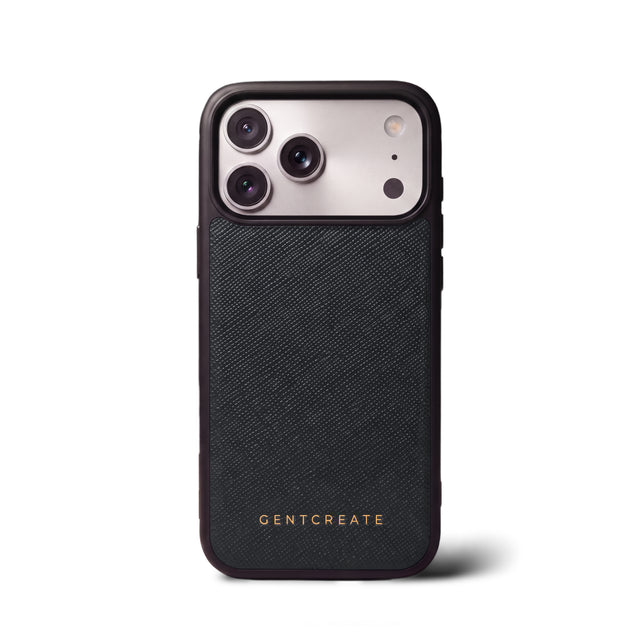


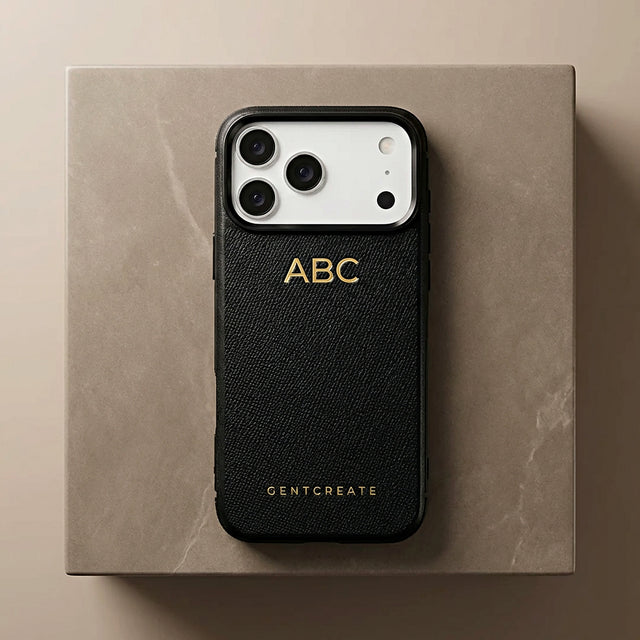


 Save $16 USD
Leather iPhone Case Saffiano Pattern
- Product Specifications
- GENTCREATE Leather iPhone Case Saffiano Pattern— Uniquely Designed Contemporary Genuine Leather iPhone Case by Gentcreate Looking for a luxury leather iPhone case that will keep your device safe and ,Non-Slip, Gritty Feel, Raised Camera Edge , Luxury , Calfskin Leather , fits iPhone 18 Pro Max, iPhone 18 Pro, iPhone 18, iPhone 17 Pro Max, iPhone 17 Pro, iPhone 17, iPhone 16 Pro Max, iPhone 16 Pro, iPhone 16, iPhone 15 Pro Max, iPhone 15 Pro, iPhone 15, iPhone 14 Pro, iPhone 14 Plus, iPhone 14 Pro Max, iPhone 14 , available in Navy, Black .
(60)From $59 $75 -
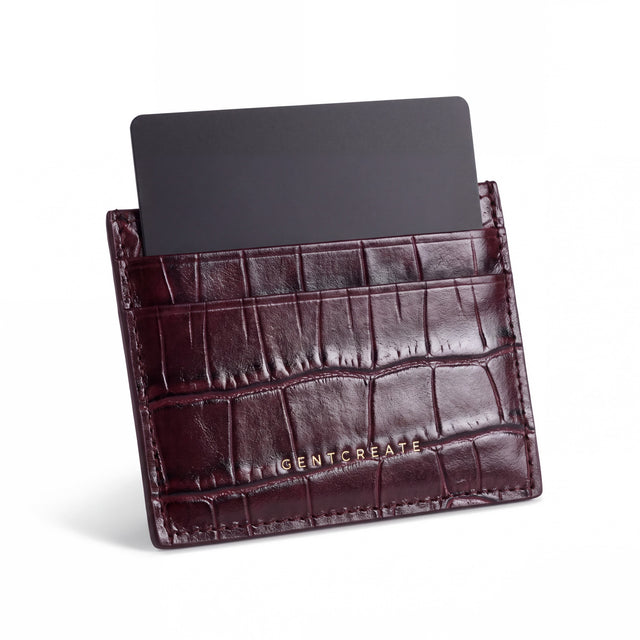


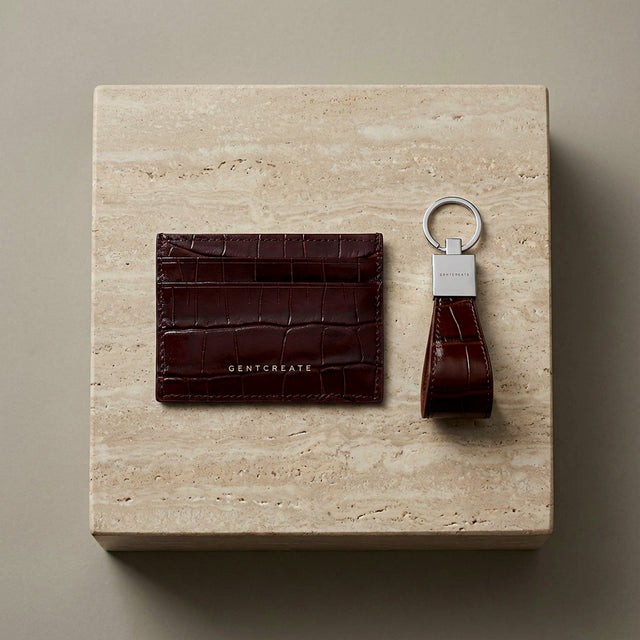




 Save $50 USD
Crocodile Embossed Leather Cardholder
- Product Specifications
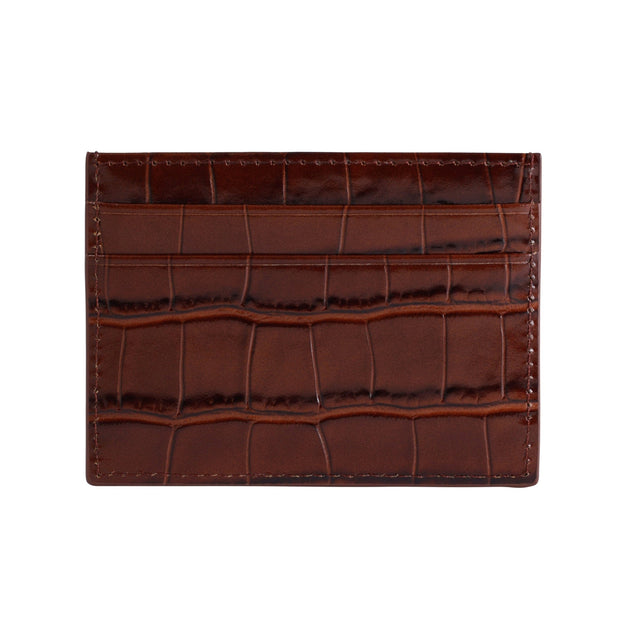
- GENTCREATE Crocodile Embossed Leather Cardholder— Our Crocodile Embossed Leather Cardholder is made with premium calfskin leather with an embossed crocodile pattern, it features four card slots and a central ,Lightweight , Luxury , Calfskin Leather , 7.3 cm / 2.87 inch x 10.3 cm / 4,52 inch , available in Black, Burgundy, Green, Navy, Brown .
(47)$130 $180 -






 Save $85 USD
Crocodile Embossed Leather Wallet
- Product Specifications
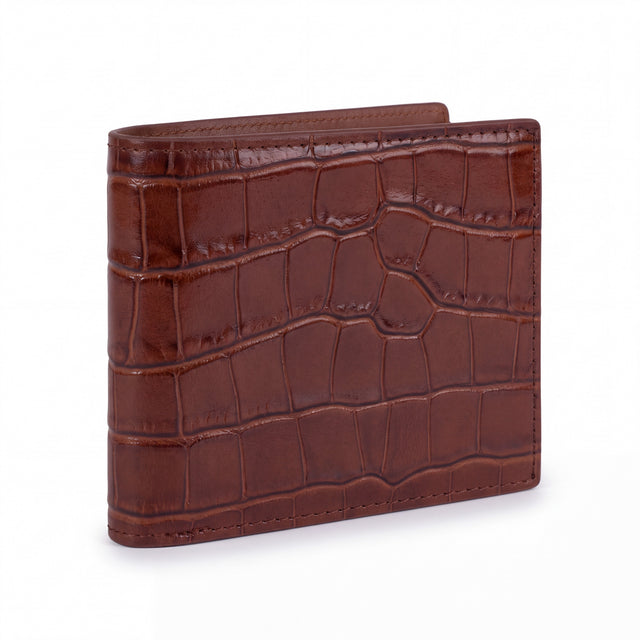
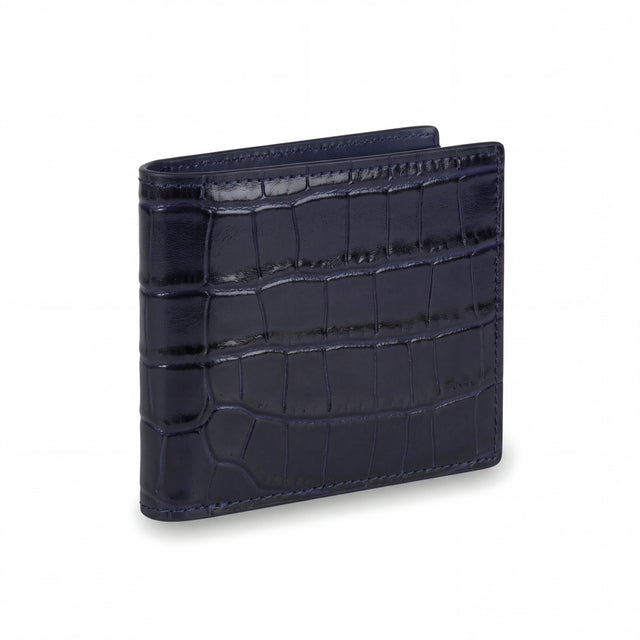
- GENTCREATE Crocodile Embossed Leather Wallet— The crocodile bifold leather wallet is made from premium calfskin with a crocodile-embossed texture, offering a luxurious and timeless appeal. ,Lightweight , Luxury , Calfskin Leather , 9.5 cm / 3.74 inch x 11.5 cm / 4.52 inch , available in Black, Green, Brown, Burgundy, Navy .
(37)$165 $250 -




 Save $38 USD
Crocodile Leather Keychain
- Product Specifications
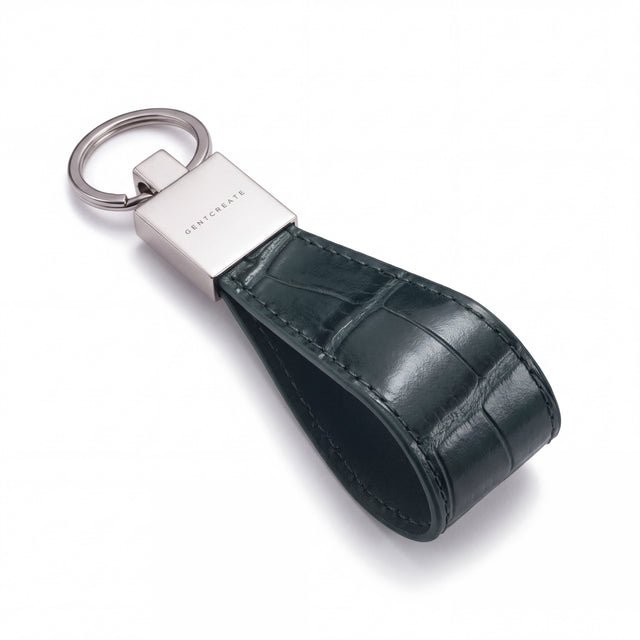
- GENTCREATE Crocodile Leather Keychain— Crocodile Leather Keychain - Leather Accessories For Men and Women Made as a part of our crocodile leather accessories set, this keychain will only improve ,Stainless Steel , Luxury , Calfskin Leather , available in Black, Burgundy, Green, Navy, Brown .
(18)$59 $97 -


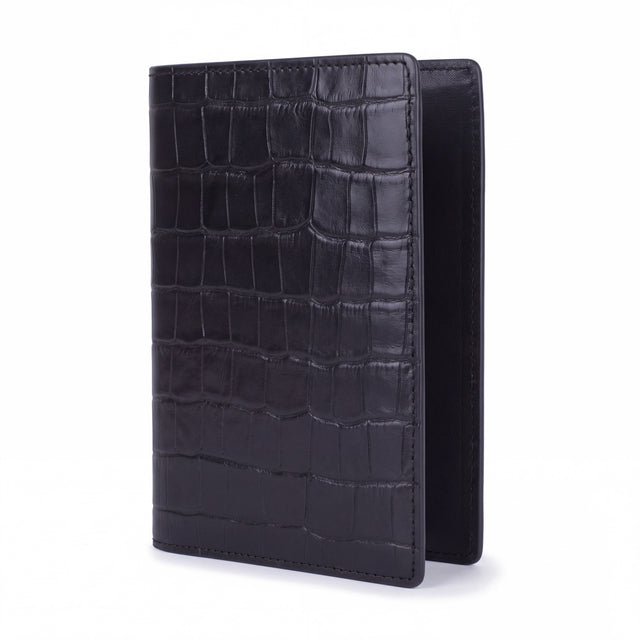


 Save $25 USD
Crocodile Leather Passport Holder
- Product Specifications
- GENTCREATE Crocodile Leather Passport Holder— The perfect companion for your travels, the Crocodile Leather Passport Holder combines elegance and practicality. ,Boarding Pass Pocket and Card Slots , Luxury , Calfskin Leather , 10.6 cm / 4.17 inch x 14.7 cm / 5.8 inches , available in Black, Brown, Navy .
(21)$130 $155 -


 Save $55 USD
Glossy Leather Passport Holder
- Product Specifications
- GENTCREATE Glossy Leather Passport Holder—Boarding Pass Pocket, Nappa Leather Interior , Luxury , Calfskin Leather , 10.6 cm / 4.17 inches x 14.7 cm / 5.8 inches , available in Black, Blue, Burgundy, Green .
(21)$190 $245


