

The parts of a wallet are called the bill compartment, the card slots, the open pockets, the gusset and slide pockets, the hidden utility pocket, and the ID window or passcase. Each one is a named bay with a job, and once you can name them, you can read any wallet the way we read it on the bench: not as a flat rectangle of leather, but as a sequence of deliberate spaces, each cut, folded, and stitched to hold one specific thing well.
The parts of a wallet are called the bill compartment, card slots, open pockets, gusset and slide pockets, the hidden utility pocket, and the ID window or passcase, each shaped by how it is stitched and folded.
- Bill compartment: the long open bay along the spine that holds folded notes; some wallets run two for sorting currencies or receipts from cash.
- Card slot vs open pocket: a card slot is a stitched bay sized to one or two cards, while an open pocket is a taller, looser space for folded paper or a small stack.
- Gusset and slide pockets: a gusset expands with bellows-like folds for coins or bulk, while a slide pocket lies flat and adds capacity without thickness.
- The interior map: every wallet is a sequence of named bays, and reading those names tells you what it was built to carry before you buy it.
- House method: our interior audit counts each bay against what you actually carry, so you choose by function, not by slot count.
Most people shop for a wallet by counting slots. We think that is the wrong instrument. A wallet is an interior, and the interior is an argument about how you carry. This guide walks every part by name, explains why two wallets with the same slot count can behave completely differently, and shows how the modern layout you take for granted came to be standard.
We call our working habit here the interior audit: a slow pass through every compartment, asking of each one, what does this hold, and do you actually carry it? It is the same question we ask before we cut a single panel. Keep it in mind as we go.
What are the different compartments in a wallet called?
The compartments in a wallet are called the bill compartment, card slots, open pockets, gusset pockets, slide pockets, the ID window, and any hidden or utility pocket behind the card bays. Those seven names cover almost everything you will ever find inside a leather wallet, from a slim front-pocket card holder to a long continental zip-around.
Think of the interior as a small piece of architecture. The bill compartment is the spine; the card slots are stacked shelves; the open pockets are the gaps between them; a gusset is a room that expands; a slide pocket is a flat drawer. When we hand-stitch a card bay, we are deciding the exact height of one shelf: a few millimeters too tall and cards rattle, a few too short and they bind on the way out.
The failure mode is treating all "pockets" as one thing. A buyer sees twelve openings and assumes twelve useful spaces, when half are open pockets that swallow cards into a single sloppy stack. Naming the parts is how you stop counting holes and start reading function. If you want to see how those names play out across body styles, our guide to the slim, minimalist, and card-holder formats maps the same vocabulary onto different silhouettes.

What is the bill compartment, and why do some wallets have two?
The bill compartment is the long, open bay that runs the full length of the wallet's spine to hold folded banknotes, and some wallets carry two of them to separate currencies, denominations, or cash from receipts. It is the oldest part of the modern wallet, the billfold is named for it, and in a bifold it sits as a single deep channel behind the card structure.
A second bill compartment is not redundancy; it is sorting. Travelers use one bay for dollars and one for euros. Others keep cash in front and receipts or business cards in back, so the working money never gets buried under paper. On a long or continental wallet, the bill bay is unfolded and full-length, which is why it lies flatter against notes and creases them less.
The counter-case: a double bill compartment doubles the leather along the spine, and on a fold that thickness lands right where the wallet already strains. If you carry little cash, the second bay is dead weight in your back pocket. The minimalist read is to keep the one bay you fill and lose the one you don't. For the longer story of how this part became the heart of the wallet, our history of the wallet, from coin pouch to billfold traces the bill compartment's whole arc.

What is a gusset pocket, and what is a slide pocket?
A gusset pocket is a compartment with expandable bellows-like side folds that open to hold bulk such as coins, keys, or a folded receipt, while a slide pocket is a flat, single-layer opening that adds capacity without adding thickness. The two solve opposite problems: one makes room, the other saves room.
A gusset works like the side of a paper bag. Pinched flat when empty, it unfolds into a small three-dimensional pouch under load, which is exactly what you want for coins, and exactly why a wallet with a coin pocket almost always uses a gusseted design rather than a plain seam. A slide pocket, by contrast, is just a tall opening behind a panel: cards or folded notes slide in and lie flat, so it disappears into the stack.
| Feature | Gusset pocket | Slide pocket |
|---|---|---|
| Construction | Bellows folds on the sides | Single flat layer |
| Expands under load | Yes | No |
| Best for | Coins, keys, bulky items | Cards, folded notes, transit pass |
| Effect on thickness | Adds bulk when full | Stays slim |
| Typical location | Coin wallets, zip-arounds | Behind card slots, money clip wallets |
The failure mode is asking a slide pocket to do a gusset's job. Stuff coins into a flat slide pocket and the seams take the strain they were never cut for; the leather stretches and the opening gapes. Match the pocket to the cargo. A money clip wallet leans almost entirely on slide pockets precisely because its whole premise is staying flat.
What is the hidden utility pocket behind the card slots for?
The hidden utility pocket is the deep, full-width space directly behind the row of card slots, and it is for the things you carry but rarely reach: a spare key card, an emergency note, a SIM tool, a folded receipt. Almost every stacked-card wallet has one, formed naturally by the back of the slot assembly, and most owners never notice it.
On the bench, this pocket is a consequence of construction as much as a feature. When we stitch a stack of card slots to the wallet's lining, the full-height space behind the shortest card defines a tall, single pocket. We can leave it raw or reinforce its mouth, and the choice changes whether it feels like a deliberate vault or an afterthought. The well-made ones have a clean, stitched opening, not a gap that frays.
The utility pocket is where the interior audit earns its keep. Most people have exactly one or two items that belong here and no more; the rest is the temptation to use depth as a junk drawer. The counter-case is the wallet that has thickened in the back pocket because every loose card found its way behind the slots. Use it for the deliberate spare, not the overflow.
Why do some wallets have a clear ID window or passcase?
A clear ID window is a transparent panel that lets you show a driver's license or badge without removing it, and a passcase is a removable card insert, often with its own ID window, that lifts out of the wallet entirely. Both exist for one reason: friction. Some cards you show often, and a window means you flash them without the fumble of pulling and reseating.
The ID window earns its place for anyone who badges into a building or shows ID at a counter daily. The passcase goes further: it is a small wallet inside the wallet, so the cards you need at a checkpoint travel as a unit and the rest stay home. On dressier styles we sometimes omit the window altogether, because a clear panel reads less like quiet luxury and more like utility, and the minimalist line favors uninterrupted leather.
The failure mode is the window you never use. A clear panel is a permanent design decision for an occasional need; if you show your ID twice a year, it is a scratch-prone rectangle the rest of the time. Decide by frequency, not by feature list, the same discipline that tells you whether a build is honest in the first place, which our guide on how to tell if a leather wallet is well made covers in full.
What is the difference between a card slot and an open pocket?
A card slot is a stitched bay sized and shaped to hold one or two cards securely in a fixed position, while an open pocket is a taller, looser space meant for a small stack, folded paper, or items you reach for as a group. The difference is precision: a slot grips, a pocket holds.
A card slot's whole virtue is its height. Cut to sit just below the top edge of a credit card, itself about 0.76 mm thick, the slot lets your thumb reach the card's corner and push it up cleanly. Stack four or five slots in a staircase and each card stays individually accessible. An open pocket abandons that precision for volume: everything goes in together and comes out as a handful.
| Card slot | Open pocket | |
|---|---|---|
| Holds | 1 to 2 cards, fixed | A loose stack or folded paper |
| Access | Individual, thumb-push | Grab the whole group |
| Height | Tuned to the card | Taller, generous |
| Card count | Up to ~8 across a layout | Variable, less organized |
| Best when | You retrieve one card at a time | You carry cards you rarely sort |
The counter-case is the wallet that is all open pockets dressed up as slots: wide, shallow openings where two or three cards slump together and you dig for the right one. A bifold typically holds about six to ten cards across its slots; a trifold about ten to twelve, because the third panel buys more slot real estate at the cost of width. Count slots, not openings.

How did the modern card-slot layout become standardized?
The modern staircase of card slots became standard once the plastic payment card arrived at a fixed size and the wallet had to organize many of them at once. Before that, a wallet was mostly a bill compartment and a pocket or two; cards as we know them did not exist to be slotted.
When cards standardized to a single dimension, the design problem changed overnight. A wallet now needed to hold a stack of identically sized rectangles and surrender any one of them individually. The answer was the overlapping staircase: each slot set a little higher than the one below, so every card shows a usable tab. It is an elegant solution to a constraint, and it has barely changed because the constraint has barely changed. The card is still the card.
The failure mode in modern design is mistaking more slots for better. A layout cut for a dozen cards encourages you to carry a dozen, and the wallet swells into the thing the minimalist tradition was reacting against. Standardization gave us the staircase; it did not oblige us to fill every step. The history of that drift, from a single pouch to today's card grid, runs through our history of the wallet.
How does GENTCREATE design the interior of a handmade leather wallet?
At GENTCREATE we design the interior by running the interior audit first, deciding which bays a person genuinely fills, and then cutting and hand-stitching only those, in full-grain, top-grain, calfskin, or Italian leather, so the wallet's anatomy matches a real carry rather than a spec sheet. We start from the carry, not from a slot count, because the maker controls every stitch, fold, and cut, and that control is only worth something if it serves the way you actually live.
In practice that means tuning each part by hand. A card slot gets a height that lets the thumb reach the card; a hidden utility pocket gets a clean stitched mouth, not a raw gap; a coin bay, when a style calls for one, gets a true gusset rather than a flat seam pretending to expand. We work the slim and front-pocket forms hardest, because in a roughly 2 mm card holder there is no margin: every millimeter of bay height is a decision. Selling direct, with no middleman markup, is what lets us spend that care on the inside, where buyers feel it long after the first impression. The interior also ages: as full-grain earns its patina, the leather around each bay softens to the cards it carries, which is why we treat conditioning a leather wallet the right way as part of the design, not an afterthought.
The counter-case is the wallet designed by feature list: every possible compartment included so the box can claim them all. It carries worse, ages worse, and fights your pocket. Our doctrine is the opposite: clean lines, uncluttered space, and only the bays you fill.

Your wallet-anatomy checklist
Decide first which bays you will actually fill, then judge a wallet against that real carry rather than its slot count. Before you buy, run your own interior audit against this list:
- Name every part you see, bill compartment, card slots, open pockets, gusset, slide pocket, utility pocket, ID window. If you can't name it, you don't know what it's for.
- Count slots, not openings, distinguish true card slots from loose open pockets before you trust the capacity claim.
- Match the pocket to the cargo, coins need a gusset, cards need a slot, flat extras need a slide pocket.
- Check the bill compartment count against your cash, one bay you fill beats two you don't.
- Decide on the ID window by frequency, daily use justifies it; occasional use makes it a scratch magnet.
- Inspect the hidden pocket's mouth, a clean stitched opening signals care; a raw gap signals shortcuts.
- Choose the form for your carry, slim card holder, bifold, trifold, or long wallet, each with a different interior budget.
Frequently asked questions
The names below let you read any wallet's interior at a glance, so each answer ties a common question back to the part it describes.
What is the long pocket inside a wallet called? That long pocket is the bill compartment, the full-length bay along the wallet's spine built to hold folded banknotes. In a bifold it sits behind the card structure as a single deep channel; in a long or continental wallet it runs flat and unfolded so notes crease less.
What is the difference between a billfold and a wallet? A billfold is a wallet, specifically one built around a bill compartment that folds, which is where the name comes from. Today the terms are used interchangeably, though "billfold" still tends to imply a classic fold with a prominent currency bay rather than a slim card-first design.
How many cards should a wallet hold? A wallet should hold the cards you use, which for most people is fewer than the slots provided. As a rough guide, a bifold offers about six to ten card slots and a trifold about ten to twelve; an ultra-slim card holder may keep up to around eight in a roughly 2 mm body. The slot count is a ceiling, not a target.
What is a passcase in a wallet? A passcase is a removable card insert that lifts out of the wallet, usually carrying its own ID window. It lets the cards you need at a checkpoint or badge reader travel as a single unit, so you can leave the rest of the wallet behind when you want to go light.
Is RFID protection a part of the wallet? RFID protection is a built-in shielding layer offered on the styles that include it, not a separate compartment you can see. Where a wallet is RFID-protected, the blocking material is integrated into the construction; if a style does not list it, assume it is a standard build.
Do all leather wallets have a hidden pocket? Most stacked-card leather wallets have a hidden utility pocket, because the space behind the card slots forms one naturally. Whether it feels deliberate depends on the maker: a clean, stitched mouth makes it a usable vault, while a raw gap makes it an afterthought.
Read your next wallet by its anatomy first, then choose the form that fits your carry. You can browse the full range of handmade designs in our leather wallets collection and the men's leather wallets selection.
-






 Save $16 USD
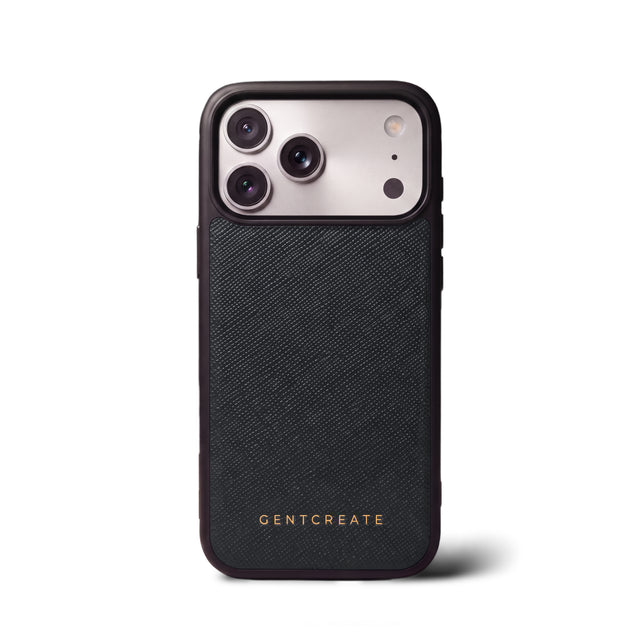
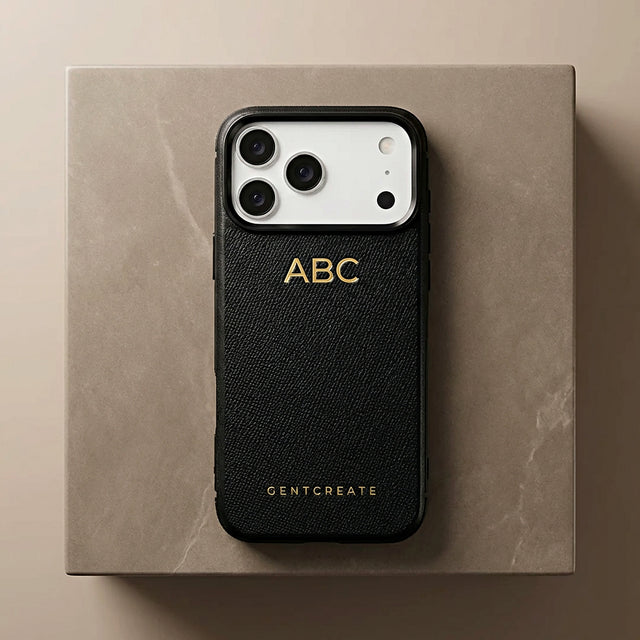
Leather iPhone Case Saffiano Pattern
- Product Specifications
- GENTCREATE Leather iPhone Case Saffiano Pattern— Uniquely Designed Contemporary Genuine Leather iPhone Case by Gentcreate Looking for a luxury leather iPhone case that will keep your device safe and ,Non-Slip, Gritty Feel, Raised Camera Edge , Luxury , Calfskin Leather , fits iPhone 18 Pro Max, iPhone 18 Pro, iPhone 18, iPhone 17 Pro Max, iPhone 17 Pro, iPhone 17, iPhone 16 Pro Max, iPhone 16 Pro, iPhone 16, iPhone 15 Pro Max, iPhone 15 Pro, iPhone 15, iPhone 14 Pro, iPhone 14 Plus, iPhone 14 Pro Max, iPhone 14 , available in Navy, Black .
(60)From $59 $75 -






 Save $50 USD
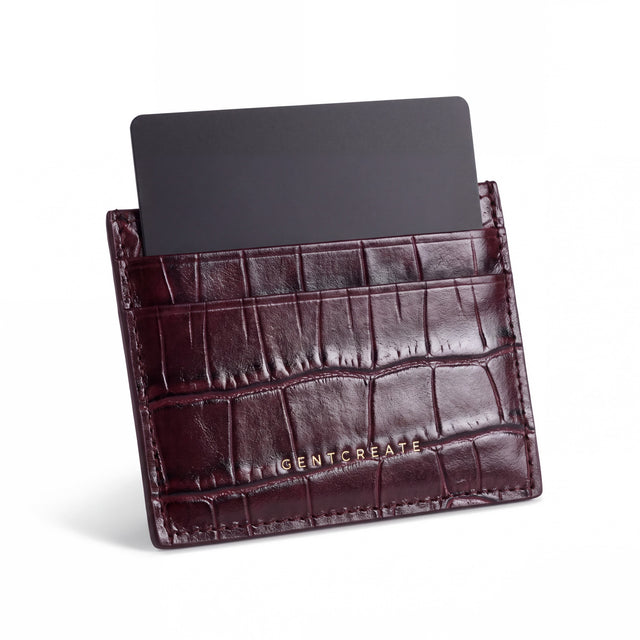
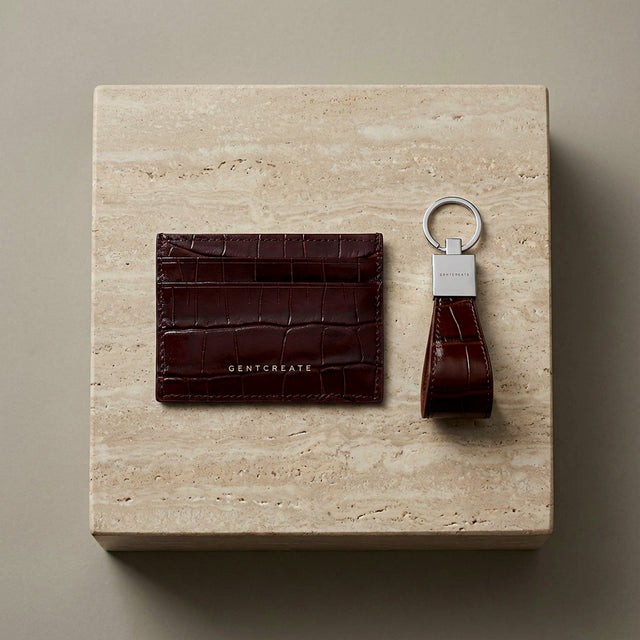
Crocodile Embossed Leather Cardholder
- Product Specifications
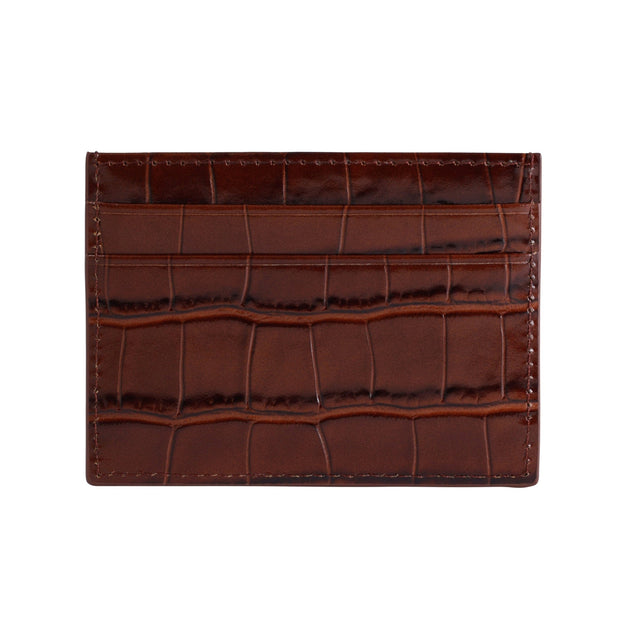
- GENTCREATE Crocodile Embossed Leather Cardholder— Our Crocodile Embossed Leather Cardholder is made with premium calfskin leather with an embossed crocodile pattern, it features four card slots and a central ,Lightweight , Luxury , Calfskin Leather , 7.3 cm / 2.87 inch x 10.3 cm / 4,52 inch , available in Black, Burgundy, Green, Navy, Brown .
(47)$130 $180 -






 Save $85 USD
Crocodile Embossed Leather Wallet
- Product Specifications
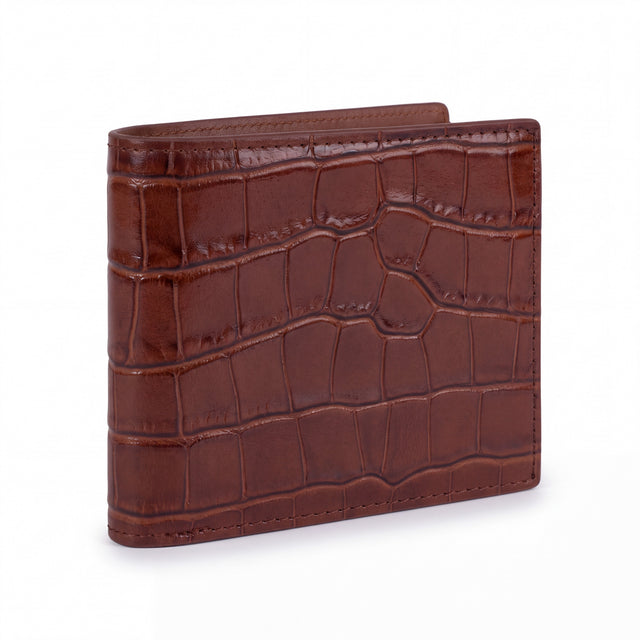
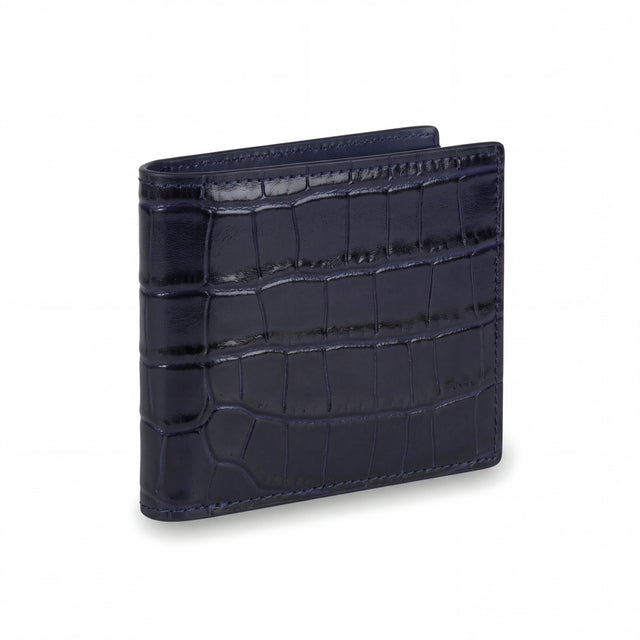
- GENTCREATE Crocodile Embossed Leather Wallet— The crocodile bifold leather wallet is made from premium calfskin with a crocodile-embossed texture, offering a luxurious and timeless appeal. ,Lightweight , Luxury , Calfskin Leather , 9.5 cm / 3.74 inch x 11.5 cm / 4.52 inch , available in Black, Green, Brown, Burgundy, Navy .
(37)$165 $250 -




 Save $38 USD
Crocodile Leather Keychain
- Product Specifications
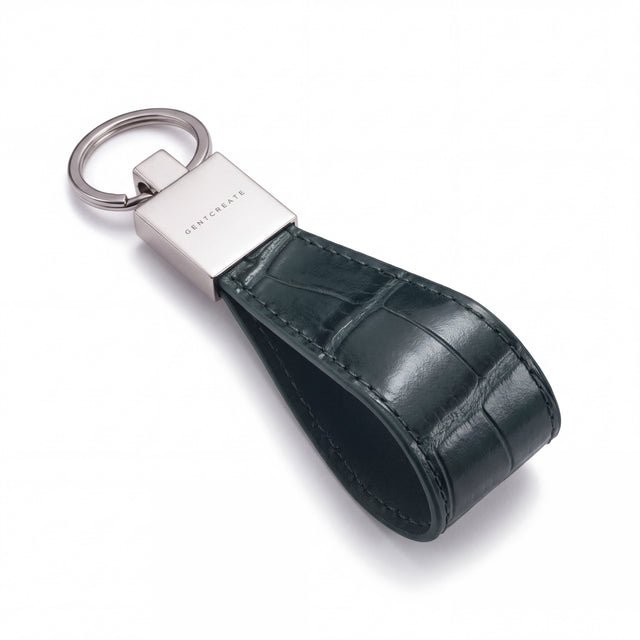
- GENTCREATE Crocodile Leather Keychain— Crocodile Leather Keychain - Leather Accessories For Men and Women Made as a part of our crocodile leather accessories set, this keychain will only improve ,Stainless Steel , Luxury , Calfskin Leather , available in Black, Burgundy, Green, Navy, Brown .
(18)$59 $97 -




 Save $25 USD
Crocodile Leather Passport Holder
- Product Specifications
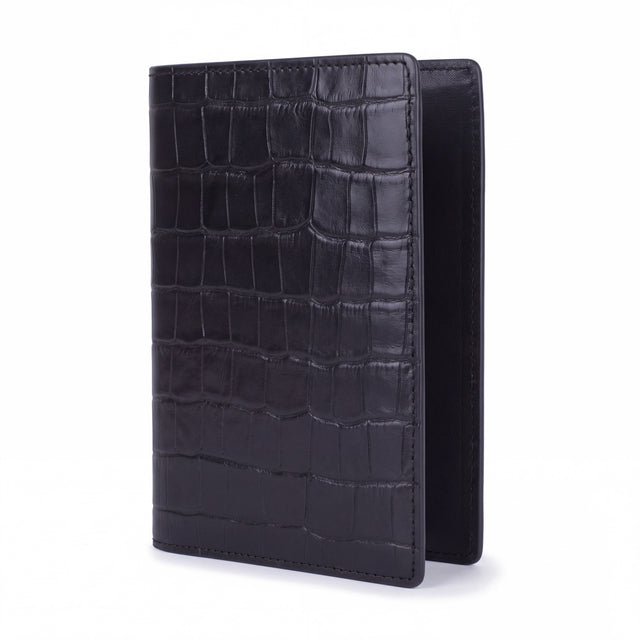
- GENTCREATE Crocodile Leather Passport Holder— The perfect companion for your travels, the Crocodile Leather Passport Holder combines elegance and practicality. ,Boarding Pass Pocket and Card Slots , Luxury , Calfskin Leather , 10.6 cm / 4.17 inch x 14.7 cm / 5.8 inches , available in Black, Brown, Navy .
(21)$130 $155 -


 Save $55 USD
Glossy Leather Passport Holder
- Product Specifications
- GENTCREATE Glossy Leather Passport Holder—Boarding Pass Pocket, Nappa Leather Interior , Luxury , Calfskin Leather , 10.6 cm / 4.17 inches x 14.7 cm / 5.8 inches , available in Black, Blue, Burgundy, Green .
(21)$190 $245


