

Pick a phone wallet case if you want a single object to grab and you carry only two or three cards; pick a separate wallet if you carry more, want your phone and your money to fail independently, and care about how full-grain leather ages in your hand. That is the whole phone wallet case vs wallet decision in one breath, and the rest of this guide is about knowing which sentence describes you.
Pick a phone wallet case when you want one object to grab and carry only two or three cards, but choose a separate slim leather wallet when you carry more cards, want your phone and money to fail independently, and care about how the leather ages.
- Capacity decides first: a phone case realistically holds two to three cards, while a slim bifold or card holder holds six to ten without bulging behind the screen.
- One object means one point of failure: losing the phone loses the cards too, which is the strongest case for keeping them separate.
- MagSafe and charging matter: a detachable leather MagSafe wallet lifts off before you set the phone on a charging pad; a built-in folio does not.
- NFC and magnets coexist with care: modern chip cards rarely demagnetize, but a card laid over the phone's NFC coil can confuse tap-to-pay.
- The Two-Card Rule is the test: if your everyday carry exceeds two cards plus phone, a separate wallet almost always serves you better.
On our bench, we make both. We hand-stitch slim card holders meant to disappear into a front pocket, and we finish leather MagSafe wallets that snap onto the back of a phone. So we are not here to crown one winner. We are here to give you a method for choosing, because the right answer changes the moment your card count or your charging habits change.
We call that method the Two-Card Rule: count what you actually carry, not what you might carry. If your real everyday load is two cards plus a phone, a case can serve you. The moment it climbs past that, the math starts favoring a dedicated wallet. Keep that rule in your back pocket as you read; we will return to it.
What is the difference between a leather phone wallet case and carrying a separate wallet?
The difference is whether your cards live on your phone or live on their own. A leather phone wallet case binds the two together into one object you grab once; a separate wallet keeps them as two objects you can pocket, drop, hand off, or lose independently of each other.
A phone wallet case comes in two broad shapes. The folio is a leather book that wraps the whole device, with card slots inside the front cover and a flap that closes over the screen. The shell-with-pocket is a slim back case, often with one or two slots, or a detachable MagSafe wallet that magnets onto the rear. Both put your cards on the same surface you tap, scroll, and photograph with all day.
A separate wallet is its own discipline. It can be a bifold, a trifold, a money clip wallet, or an ultra-slim card holder around 2mm thick, and it answers only to your pocket, never to your screen. If you want the full vocabulary of forms and parts, our anatomy of a wallet guide walks through every component, and our breakdown of slim wallet vs minimalist wallet vs card holder explains where each format earns its place.
The failure mode here is treating these as interchangeable. They are not. One is a phone that also holds cards; the other is a wallet that holds nothing but what a wallet should. Choose the object whose primary job matches your primary need.
How many cards can a leather phone wallet case actually hold?
A phone wallet case realistically holds two to three cards, not the six to ten a slim wallet carries. The slots are real, but the geometry is unforgiving: every card sits on top of a phone that is already a few millimeters thick, and the leather flap or magnet has to keep them all flush against a screen you also need to use.
Physics sets the ceiling. A credit card is about 0.76mm thick. Stack three and you have added roughly 2.3mm to the back of a device, plus the case leather. Push a folio to five cards and the cover stops closing cleanly; push a MagSafe wallet past three and the magnetic hold weakens and cards start sliding at the worst moment.
A separate wallet has room to breathe. Here is how the formats compare when capacity is the question.
| Format | Realistic card count | Best for | Where it strains |
|---|---|---|---|
| MagSafe / shell phone wallet | 2 to 3 | One-hand carry, the tap-and-go life | Loses grip and slides past 3 |
| Folio phone case | 3 to 4 | A few cards plus the phone, one object | Cover won't close cleanly when full |
| Slim card holder (~2mm) | 4 to 6 | Minimalists, front-pocket carry | No cash, no coins |
| Bifold | 6 to 10 | Daily cards plus a little cash | Bulks up in a back pocket |
| Trifold | 10 to 12 | Maximum capacity, more cash | Thickest profile of the group |
The counter-case is the over-stuffed phone. We see it constantly: a folio crammed with five cards, a loyalty stack, and a folded receipt, riding a phone that now won't lie flat. That is not a wallet problem or a phone problem. It is a capacity-mismatch problem, and the Two-Card Rule would have caught it. If your honest count lands in the bifold or trifold column, read our comparison of bifold vs trifold wallets before you decide.

Is it risky to keep your phone and your cards together in one case?
Yes: the real risk is a single point of failure, where losing the phone loses the cards in the same instant. Convenience is the whole appeal of a phone wallet case, and convenience is also exactly what makes it fragile, because one slip empties two parts of your life at once.
Think through the scenarios. The phone slides off a café table and the case pops open. You set it down at a bar and walk away. A pickpocket takes the most obvious object in your pocket. In every case, a combined carry turns one loss into two: device, cards, and access, all gone together. A separate wallet means the odds of losing both at the same moment drop sharply, because they are rarely in the same hand.
There is a quieter risk too: wear. A phone is the most handled object you own, in and out of a pocket a hundred times a day. Cards riding alongside it take that same abuse, and the leather flap over your screen meets keys, coins, and countertops far more often than a wallet ever would.
The counter-case is the deliberate minimalist who carries a phone, one card, and nothing else, and who would rather risk both than carry two objects. That is a legitimate choice, and a clean leather MagSafe wallet serves it well. Just make it a choice, not a default. The Two-Card Rule exists so you decide on purpose.
Can a phone wallet case block or slow down wireless charging?
A built-in folio or a permanently attached card pocket can absolutely interfere with wireless charging; a detachable MagSafe wallet does not, because you remove it first. The deciding factor is whether the cards sit between the charging coil and the pad when you set the phone down.
Wireless charging works by induction between two coils. Anything dense, metallic, or thick sitting in that gap, such as a stack of cards, a metal money clip, or a rigid leather cover, can weaken the link, slow the charge, or stop it entirely. A folio with cards behind the device is the classic offender, because the cards live exactly where the energy needs to pass.
This is where a detachable design earns its keep. A leather MagSafe wallet magnets onto the back for carry and lifts off in one motion before the phone touches a charging pad or a wireless car mount. The cards are simply not in the path anymore. A sewn-in folio gives you no such option; the cards stay put whether you are charging or not.
| Carry style | Wireless charging | Card removal | Trade-off |
|---|---|---|---|
| Detachable MagSafe wallet | Lift it off, then charge | One motion, off and on | Easy to set down and forget |
| Built-in folio | Cards may block the coil | Open the cover each time | Always attached, always in the way |
| Separate slim wallet | Never touches the phone | Independent, always | Two objects to carry |
The failure mode is discovering this at midnight, when your phone reads "charging" but the battery never climbs because a card is sitting on the coil. If wireless charging is part of your daily rhythm, favor a detachable wallet or a separate one. A folio asks you to choose between carrying cards and charging clean, and that is a choice you should not have to make every night.
Does a card in a phone case demagnetize your cards or interfere with NFC tap-to-pay?
Modern chip-and-tap cards rarely get demagnetized by a phone, but a card laid directly over the phone's NFC coil can confuse tap-to-pay for both. The old fear of magnets wiping your magnetic stripe is mostly a legacy worry; the live issue today is two radios trying to talk at once.
Here is the distinction. Demagnetizing affects the magnetic stripe, the brown band on the back, and it takes a fairly strong, sustained magnet to corrupt it. The magnets in a well-made MagSafe wallet are tuned for that reality. Most of your cards now run on EMV chips and contactless NFC, which a magnet does not touch at all.
NFC interference is the real-world friction. Your phone has its own NFC coil for tap-to-pay, and a contactless bank card has one too. Stack a tap-enabled card flat against the back of the phone, over the same antenna region, and a payment terminal can read the wrong one, read both, or read neither. The reader hesitates, and you get the awkward double-tap dance at the register.
The fix is simple and it is a carry habit, not a product flaw: keep contactless cards off the phone's NFC zone, or carry them in a separate slim wallet where they have a clear field. Styles that offer RFID protection add a further layer for cards you want shielded, available on the GENTCREATE wallets that are built for it.
The counter-case is the person carrying one chip-only card with no contactless function: no NFC, no conflict, carry it on the phone freely. For everyone tapping to pay, separation keeps the handshake clean.
Is a detachable MagSafe leather wallet better than a built-in folio case?
For most modern carriers, a detachable MagSafe leather wallet beats a built-in folio, because it gives you the convenience of a phone wallet without surrendering wireless charging or one-hand phone use. The folio's all-in-one design is its strength and its cage; the MagSafe wallet keeps the option to separate.
A folio wraps the whole phone. That means a flap over the screen every time you want the camera or a quick glance, a thicker object in the hand, and cards permanently parked behind the device. It is genuinely one object, and that is exactly why it fights you when you want to charge wirelessly or shoot a photo fast.
A detachable MagSafe wallet behaves more like a slim card holder that happens to ride on your phone. Snap it on for the walk to lunch; lift it off to charge, to hand someone your phone, or to drop the wallet alone into a jacket. On our bench we hand-stitch these in full-grain and calfskin so the leather earns a patina from your touch, not from being dragged across the screen.
| Question | Detachable MagSafe wallet | Built-in folio |
|---|---|---|
| Wireless charging | Lift off, then charge | Often blocked |
| One-hand phone use | Phone stays bare and grippable | Flap in the way |
| Card capacity | 2 to 3 | 3 to 4 |
| Carry cards alone | Yes, pops off | No, sewn in |
| Single point of failure | You can separate them | Always combined |
The failure mode of the folio is the slow realization that you have wrapped your most-used tool in leather for the sake of cards you could have carried in something half the size. If you like the idea of cards on your phone, choose the design that lets you take them off.

When does a slim separate wallet beat a phone wallet case for everyday carry?
A slim separate wallet wins the moment you carry more than two or three cards, want your phone and money to stay independent, or care about leather that ages on its own terms. That covers most people most of the time, which is why the separate wallet remains the quiet default of considered everyday carry.
It wins on capacity. A ~2mm card holder carries four to six cards; a slim bifold handles six to ten with a little cash. No phone case touches those numbers without becoming a brick.
It wins on independence. Phone in one pocket, wallet in another, and a single loss never empties both. It wins on the body, too: a thin wallet up front sidesteps the lopsided load of a fat back-pocket wallet, a posture issue we cover in our piece on whether sitting on your wallet causes back pain. And it wins on character: full-grain leather is the most durable cut and develops a patina that is yours alone, something a screen-bound folio can't offer.
This is the heart of the minimalist doctrine we build by: the power of simplicity, of clean lines, of carrying only what you use. A slim wallet is that doctrine made physical. Browse the Slim Leather Wallets collection or the Leather Front Pocket Wallets collection to see the forms that hold the line at thin. If you prefer a metal-tensioned carry, our guide to what a money clip wallet is and how it works covers that path.
The counter-case is genuine: the one-card minimalist who already keeps a single tap card and a phone, and who values one object above all. For them, a MagSafe wallet is the cleaner answer. For everyone else, which is most everyone, the Two-Card Rule points to a wallet.

How does GENTCREATE make leather MagSafe wallets and phone cases that carry cards safely?
We make them by controlling every stitch, fold, and cut ourselves, so card safety is a process decision rather than a price tier. As a direct-to-consumer maker, we hand-finish our leather goods and sell them direct, with no third-party markup between the bench and your pocket.
We work in full-grain, top-grain, calfskin, and Italian leather, with finishes from smooth to Saffiano, Epsom, pebbled, and crocodile- or lizard-embossed for those who want texture. Our detachable MagSafe wallets are built to lift off cleanly for wireless charging, and our card bays are hand-stitched to hold cards snug without crushing them against a screen.
Card safety guides the construction. We design slots to keep contactless cards off the phone's NFC zone where that matters, and RFID-protected styles are available where the design calls for it. Each piece arrives in a sustainable gift box, with free shipping and a product warranty behind the work, and personalization is available through our Custom Leather Wallets line.
Our position is plain. A phone case is a fine tool for the smallest carry; a separate slim wallet is the better tool the instant you carry more or want your leather to live its own life. We make both well, and the Two-Card Rule tells you which one is yours.

Your phone-wallet-vs-separate-wallet checklist
Decide capacity first: if your everyday carry runs past two or three cards, choose a separate wallet, and reserve a phone case for the leanest loads. Each "yes" pulls you toward the separate wallet; mostly "no" means a phone case may fit.
- Count your cards. More than two or three in daily use points to a separate wallet.
- Apply the Two-Card Rule. Phone plus two cards is the honest ceiling for a case.
- Check your charging. If you charge wirelessly, choose detachable MagSafe or a separate wallet, never a built-in folio.
- Audit your tap cards. Multiple contactless cards on the phone invite NFC conflicts; separate them.
- Weigh the loss. If losing your phone and cards together is unacceptable, carry them apart.
- Decide on patina. Want full-grain leather to age in your hand? A slim wallet shows it best.
- Match the form. Card holder for the leanest carry, bifold or trifold for more, MagSafe for one-object minimalism.
- Confirm the finish. Choose the leather and texture you'll still want to touch in five years.
Frequently asked questions
Short answer: a separate slim wallet suits most carriers, while a phone wallet case fits only the leanest two-or-three-card load, and the questions below work through the trade-offs.
Is a phone wallet case or a separate wallet better for everyday carry? A separate slim wallet is better for most everyday carry, while a phone wallet case suits only the leanest two-or-three-card load. The separate wallet wins on capacity, on keeping your phone and money independent, and on letting full-grain leather develop its own patina. Reach for a case only when one object and a tiny card count genuinely describe your day.
How many cards fit in a leather phone wallet case? Two to three cards is the honest maximum for a phone wallet case. Folios stretch to three or four before the cover stops closing cleanly, and MagSafe wallets lose their grip past three. A slim card holder carries four to six and a bifold six to ten, which is why higher card counts belong in a separate wallet.
Will carrying a card on my phone demagnetize it or break tap-to-pay? Demagnetizing is unlikely with modern chip cards, but a contactless card sitting over the phone's NFC coil can confuse tap-to-pay. Today's cards run on EMV chips and NFC, which magnets don't affect; the friction is two antennas competing at the register. Keep contactless cards off the phone's tap zone, or carry them in a separate slim wallet.
Can a phone wallet case block wireless charging? A built-in folio or attached card pocket can block wireless charging, but a detachable MagSafe wallet does not. Cards between the coil and the pad weaken or stop the charge, and a sewn-in folio leaves them there permanently. A detachable wallet lifts off in one motion before the phone touches the pad, keeping the charge clean.
Is a detachable MagSafe wallet better than a built-in folio? For most modern users, a detachable MagSafe wallet is better than a built-in folio. It keeps the convenience of cards on your phone while preserving wireless charging, one-hand phone use, and the option to carry the cards alone. A folio locks all of that into one permanent object you can't easily separate.
What does GENTCREATE recommend for carrying a phone and cards? We recommend applying our Two-Card Rule: phone plus two cards can live in a detachable MagSafe wallet, and anything more belongs in a separate slim wallet. We hand-stitch both from full-grain, calfskin, and Italian leather, with RFID-protected styles where the design calls for it. The right choice follows your real card count, not your maximum one.
Whichever way the Two-Card Rule points you, the Slim Leather Wallets collection is where the leather that ages with you begins.
-






 Save $16 USD
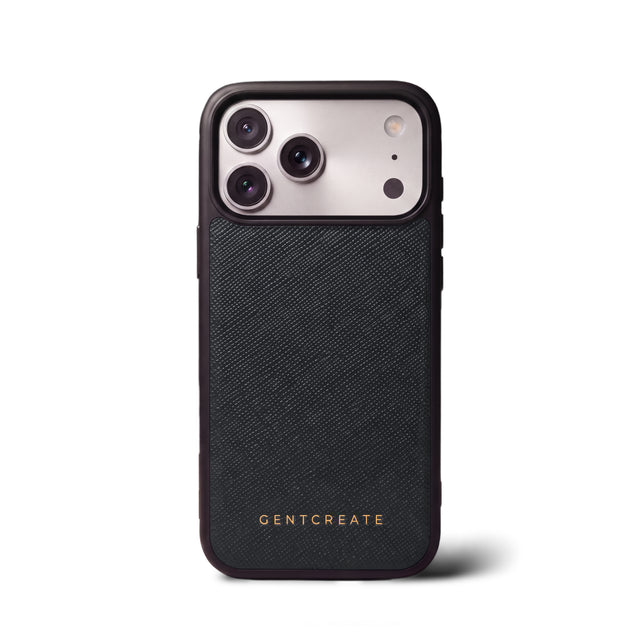
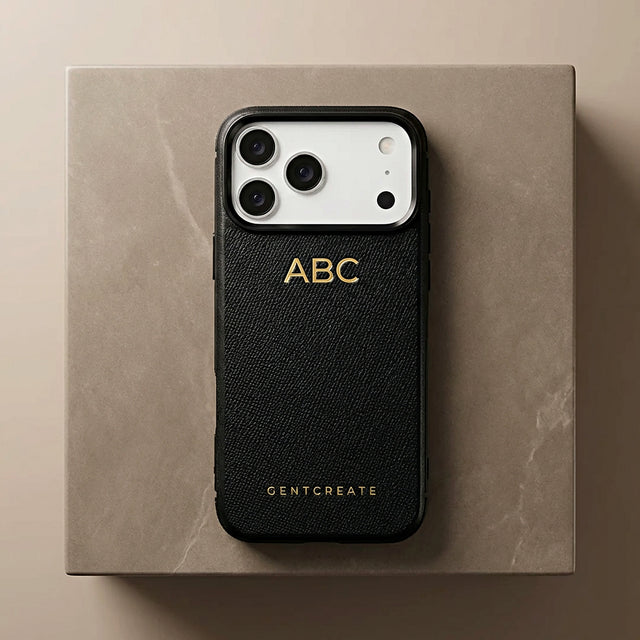
Leather iPhone Case Saffiano Pattern
- Product Specifications
- GENTCREATE Leather iPhone Case Saffiano Pattern— Uniquely Designed Contemporary Genuine Leather iPhone Case by Gentcreate Looking for a luxury leather iPhone case that will keep your device safe and ,Non-Slip, Gritty Feel, Raised Camera Edge , Luxury , Calfskin Leather , fits iPhone 18 Pro Max, iPhone 18 Pro, iPhone 18, iPhone 17 Pro Max, iPhone 17 Pro, iPhone 17, iPhone 16 Pro Max, iPhone 16 Pro, iPhone 16, iPhone 15 Pro Max, iPhone 15 Pro, iPhone 15, iPhone 14 Pro, iPhone 14 Plus, iPhone 14 Pro Max, iPhone 14 , available in Navy, Black .
(60)From $59 $75 -






 Save $50 USD
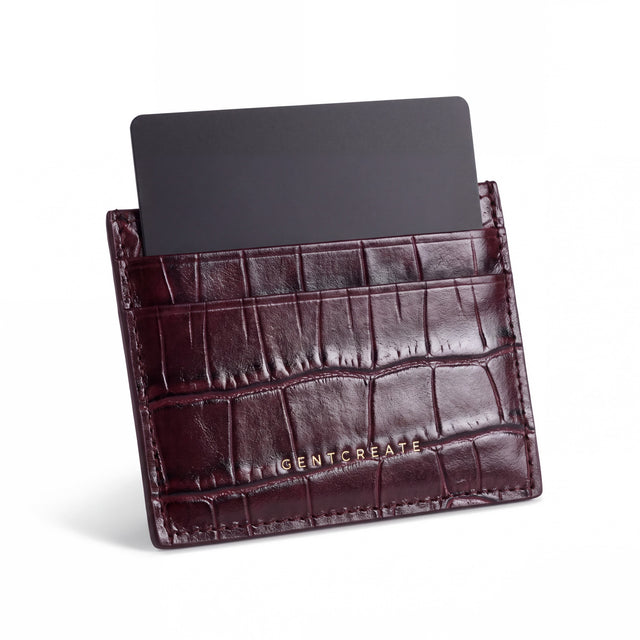
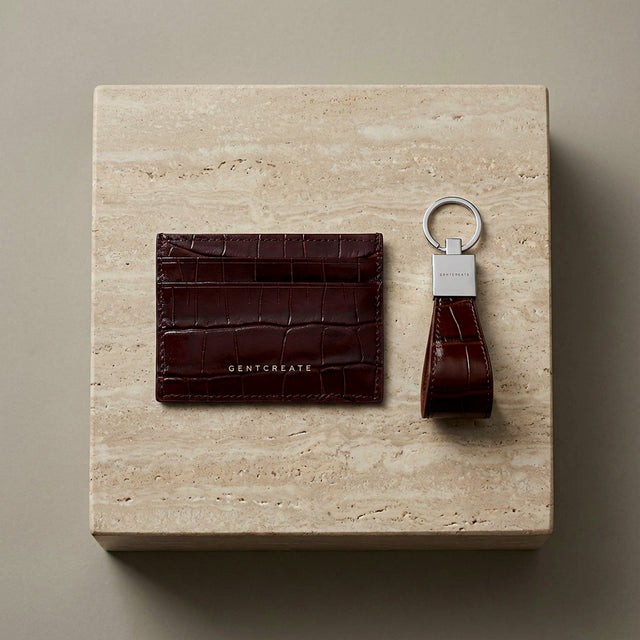
Crocodile Embossed Leather Cardholder
- Product Specifications
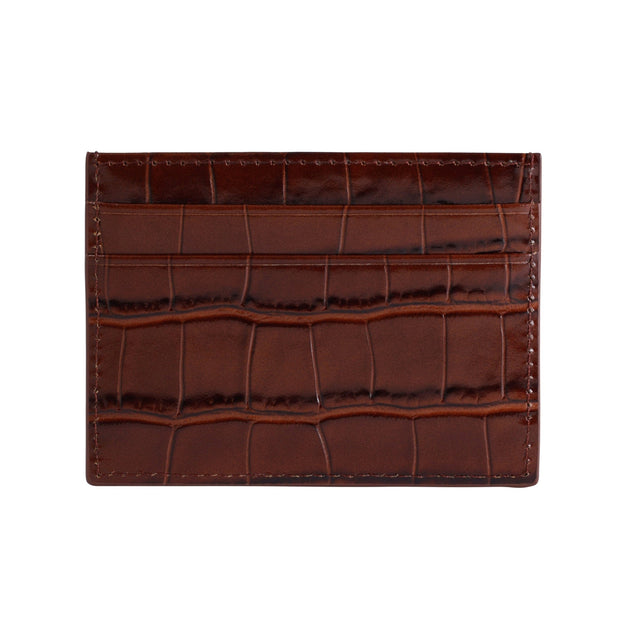
- GENTCREATE Crocodile Embossed Leather Cardholder— Our Crocodile Embossed Leather Cardholder is made with premium calfskin leather with an embossed crocodile pattern, it features four card slots and a central ,Lightweight , Luxury , Calfskin Leather , 7.3 cm / 2.87 inch x 10.3 cm / 4,52 inch , available in Black, Burgundy, Green, Navy, Brown .
(47)$130 $180 -






 Save $85 USD
Crocodile Embossed Leather Wallet
- Product Specifications
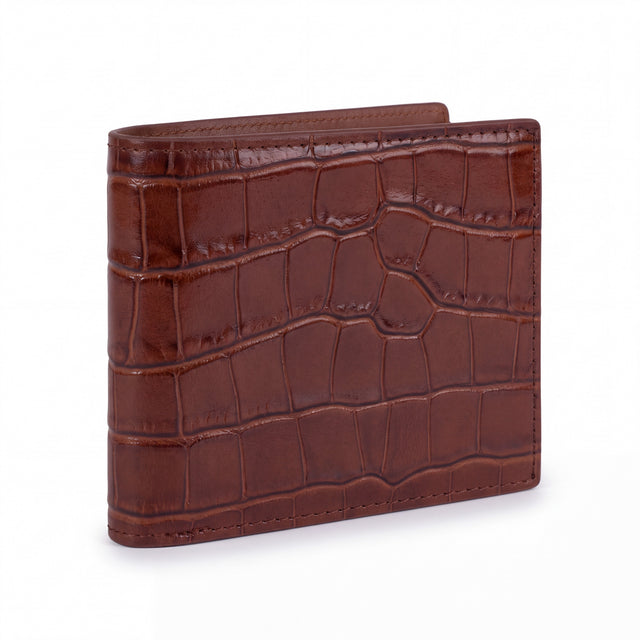
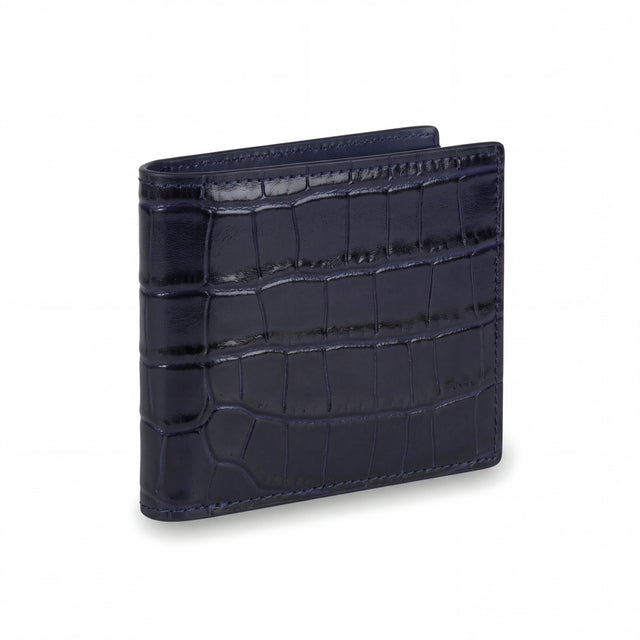
- GENTCREATE Crocodile Embossed Leather Wallet— The crocodile bifold leather wallet is made from premium calfskin with a crocodile-embossed texture, offering a luxurious and timeless appeal. ,Lightweight , Luxury , Calfskin Leather , 9.5 cm / 3.74 inch x 11.5 cm / 4.52 inch , available in Black, Green, Brown, Burgundy, Navy .
(37)$165 $250 -




 Save $38 USD
Crocodile Leather Keychain
- Product Specifications
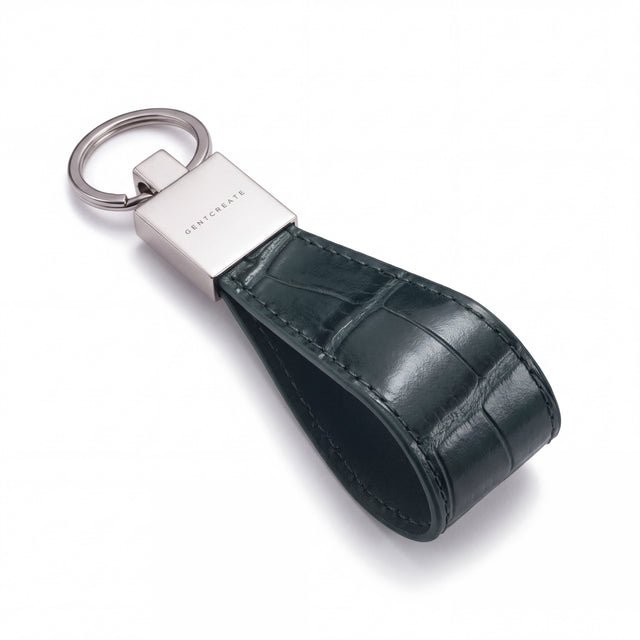
- GENTCREATE Crocodile Leather Keychain— Crocodile Leather Keychain - Leather Accessories For Men and Women Made as a part of our crocodile leather accessories set, this keychain will only improve ,Stainless Steel , Luxury , Calfskin Leather , available in Black, Burgundy, Green, Navy, Brown .
(18)$59 $97 -




 Save $25 USD
Crocodile Leather Passport Holder
- Product Specifications
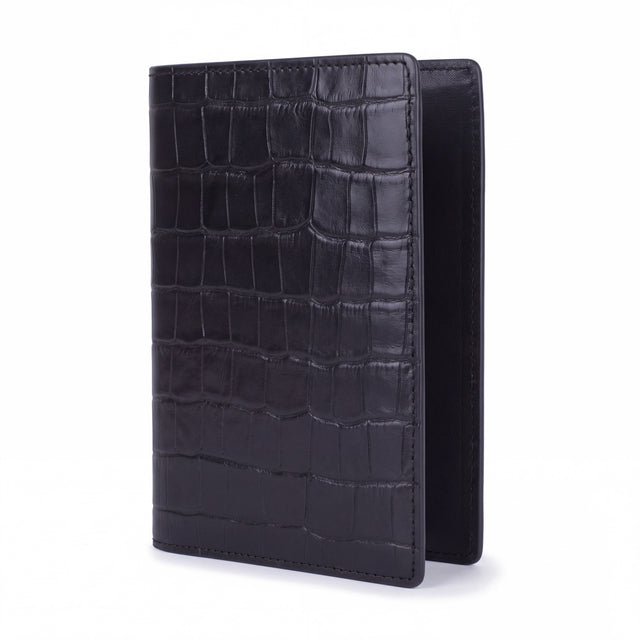
- GENTCREATE Crocodile Leather Passport Holder— The perfect companion for your travels, the Crocodile Leather Passport Holder combines elegance and practicality. ,Boarding Pass Pocket and Card Slots , Luxury , Calfskin Leather , 10.6 cm / 4.17 inch x 14.7 cm / 5.8 inches , available in Black, Brown, Navy .
(21)$130 $155 -


 Save $55 USD
Glossy Leather Passport Holder
- Product Specifications
- GENTCREATE Glossy Leather Passport Holder—Boarding Pass Pocket, Nappa Leather Interior , Luxury , Calfskin Leather , 10.6 cm / 4.17 inches x 14.7 cm / 5.8 inches , available in Black, Blue, Burgundy, Green .
(21)$190 $245


